
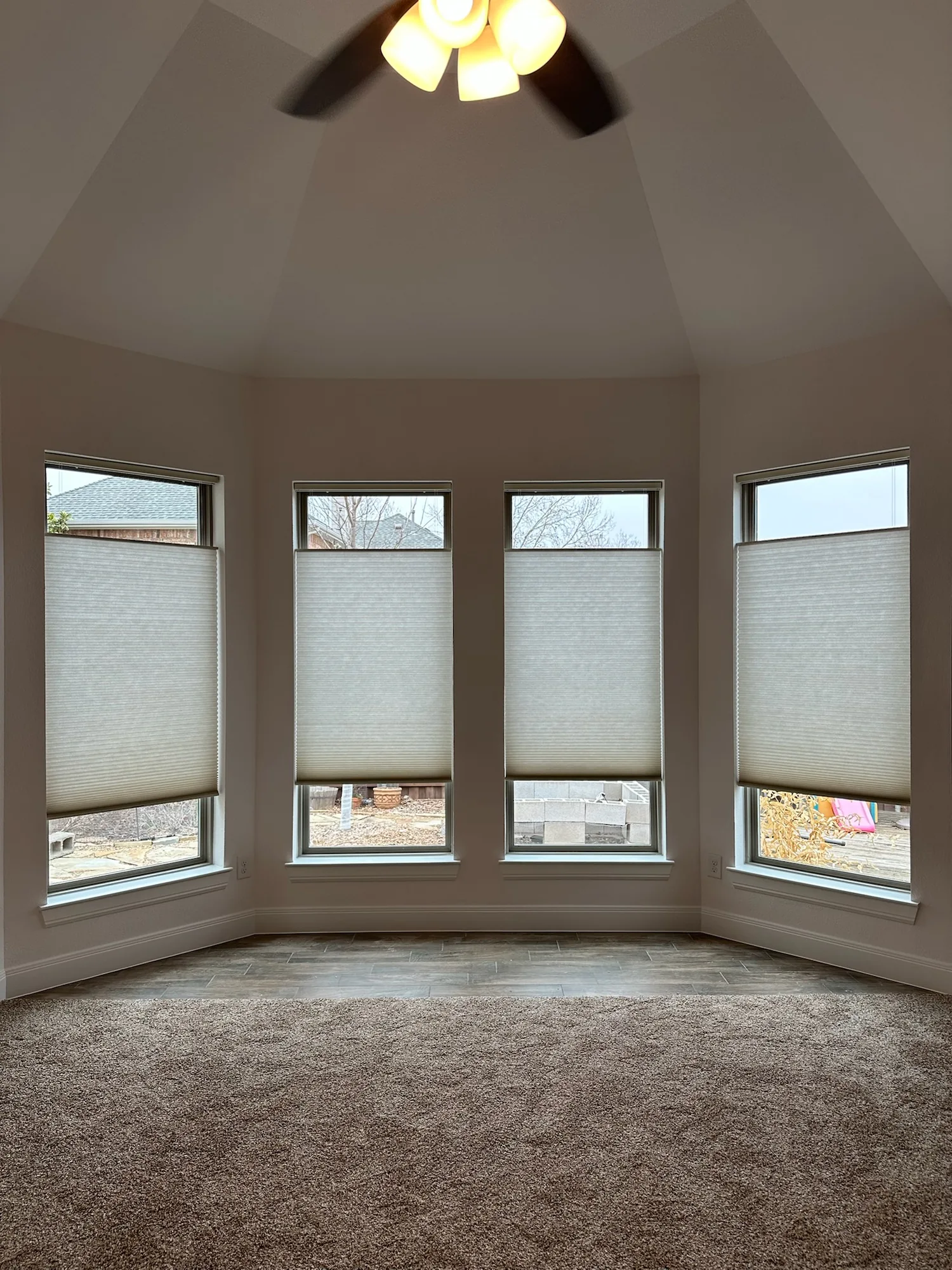
What single cell and double cell actually mean
Cellular shades, also called honeycomb shades, are built from folded fabric that forms small air filled pockets when you look at the shade from the side. Those pockets are the "cells." A single cell shade has one row of these pockets. A double cell shade has two rows, stacked front to back, so it is a thicker shade with more trapped air inside.
The name comes from the honeycomb shape you see when you slice through the fabric. More rows of cells means more layers of trapped air between your room and the glass. That trapped air is the whole point of a cellular shade. Air does not move heat as easily as glass or a thin fabric does, so the more air you trap, the better the shade holds back heat.
Insulation: where the real difference shows up
This is the main reason people choose one over the other. A double cell shade traps more air than a single cell shade, so it does a better job slowing down heat transfer through the glass. Single cell shades still help, just not as much.
Cellular shades in general meaningfully cut heat transfer through glass, often in the range of 20 to 40 percent depending on the fabric, color, and how well the shade fits the window. Double cell versions sit toward the stronger end of that range because of the extra layer of air.
In a place like Tucson, this matters more than it might elsewhere. Daytime highs regularly hit 100 to 110 degrees here for a long stretch of the year. A window with a double cell shade is working harder to keep that outside heat from radiating into the room. When the sun sits lower in the sky, glare and a different kind of heat gain become the issue during the day, while heat loss through the glass matters more on cold desert nights. Double cell shades help buffer both directions.
Price differences
Double cell shades cost more than single cell shades, usually by a noticeable margin. You are paying for extra fabric, a more complex manufacturing process, and a thicker overall product. For a whole house project, that price difference adds up across multiple windows.
Single cell shades are the more budget friendly choice and still deliver real light control, privacy, and a clean look. If your goal is mostly about style and basic light filtering rather than maximum energy performance, single cell is often the smarter buy.
Light control and look
Both styles come in light filtering and blackout fabric options, so insulation is not the only factor at play. A double cell shade, because it is thicker, tends to have a slightly more substantial look on the window. Some homeowners like that fuller appearance. Others prefer the slimmer profile of a single cell shade, especially on smaller windows where a bulkier shade can feel out of proportion.
Neither option is more or less private than the other on its own. Privacy depends more on the fabric opacity you choose than on whether it is single or double cell.
Color selection is nearly identical between the two as well. Most manufacturers offer the same fabric colors and textures in both single and double cell versions, so you rarely have to compromise on look just to get better insulation. The stack height at the top of the window, meaning how much fabric bunches up when the shade is fully raised, is usually a bit taller on a double cell shade simply because there is more material folded into each pleat.
How they hold up over time
Both single cell and double cell shades are built from similar fabrics, so day to day durability is fairly close between the two. Where double cell shades sometimes have an edge is in reducing the everyday temperature swing your fabric is exposed to right at the glass. Less extreme heat cycling at the window can help fabric hold its shape and color a bit longer, though this is a modest benefit rather than a dramatic one.
When single cell makes more sense
- Smaller windows where a slimmer profile looks better.
- Rooms that get moderate sun rather than long afternoon exposure.
- Budget conscious projects covering many windows at once.
- Spaces where style matters more than maximum insulation, like a guest room or hallway window.
When double cell makes more sense
- West or south facing rooms that catch strong afternoon sun for hours at a time.
- Home offices or bedrooms where you want steadier indoor temperatures.
- Rooms with large windows or glass doors, where more surface area means more heat transfer to manage.
- Anyone planning to keep the shades closed often during the hottest months.
Cellular shades and cordless or motorized lift
Both single cell and double cell shades are available with cordless lift systems and motorized options. This is worth knowing because the extra thickness of a double cell shade does not usually change how it operates. You can get a cordless double cell shade just as easily as a cordless single cell shade, so operation style should not be the deciding factor between the two.
Motorized versions of either style let you set schedules, so the shades close automatically during the hottest part of the afternoon and open again once the sun has moved. This can be a nice way to get more consistent performance out of either single cell or double cell fabric, since the shade closes even on days when nobody is home to do it manually.
Making the final call
There is no single right answer for every window. A lot of homeowners end up mixing the two. Double cell in the rooms that bake in the afternoon sun, single cell in rooms that do not need as much help. That approach keeps the budget reasonable while putting the stronger insulation where it counts.
Think about how you actually use each room too. A home office where you sit near the window most of the day benefits more from the added insulation of double cell than a hallway window you pass by a few times a day. A nursery or bedroom where you want steady temperatures overnight is another good candidate for double cell, especially on a wall that faces the afternoon sun.
Matt Diaz walks through this room by room during a free consultation, so you are not guessing which shade belongs where. He brings fabric samples so you can see and feel the thickness difference in person before deciding, and he can point out which of your windows would benefit most from the extra layer of insulation double cell provides.
Want help figuring out which rooms need double cell and which can use single cell? Visit our contact page or call (844) 936-2446 to schedule your free in-home consultation.