
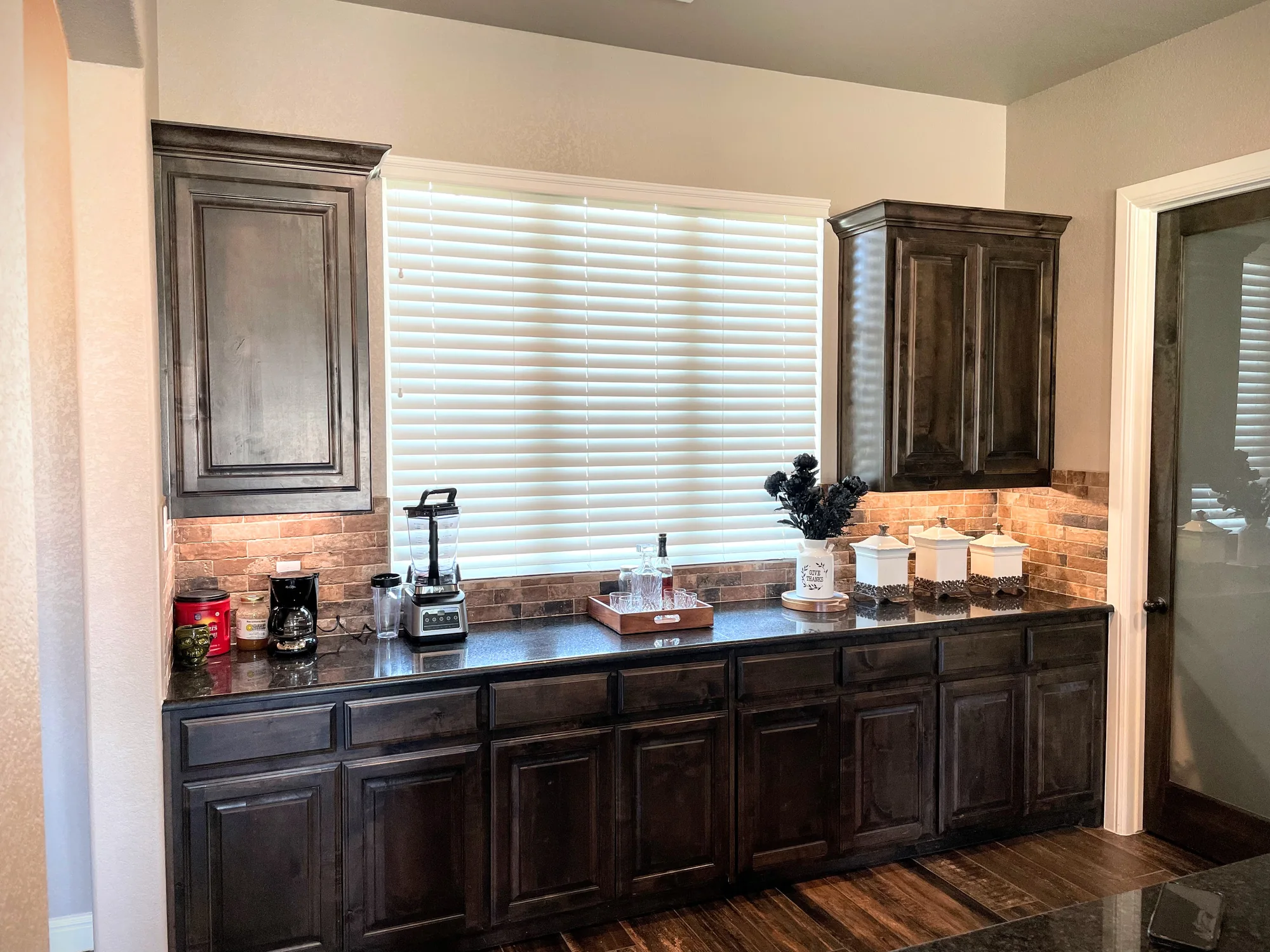
Why Blinds Wear Out Faster Than You Think
Blinds do not usually fail all at once. They wear down slowly, one tiny crack or one sticky cord at a time, until one day you notice they just do not work like they used to. Most homeowners keep using tired blinds far longer than they should, simply because the decline happens so gradually.
Here in Tucson, that wear and tear can happen a bit faster than in other parts of the country. We get roughly 350 sunny days a year, and that constant sun exposure puts real stress on plastic parts, cords, and fabric over time. It is worth checking your blinds every so often for the signs below, rather than waiting until something breaks completely.
Sign 1: Warped or Yellowed Slats
Take a close look at your slats, especially on windows that get a lot of direct sun. If they are bowed, bent, or no longer sitting flat against each other, that is a clear sign of warping. Warped slats do not close all the way, which means light and heat leak through even when the blinds are shut.
Yellowing is another common issue, especially on white or light colored vinyl and faux wood blinds. Once slats start to yellow, that color change usually will not reverse, and it tends to spread to more slats over time.
Sign 2: Broken Lift or Tilt Mechanisms
If your blinds do not raise evenly, get stuck halfway, or will not tilt open and closed the way they used to, the internal mechanism is likely wearing out. This is one of the most common reasons people end up replacing blinds, since the mechanism is often not something you can easily repair yourself.
A few signs your lift or tilt system is failing:
- The blinds hang crooked, with one side higher than the other.
- You have to tug or jiggle the cord to get any movement at all.
- The wand no longer turns the slats smoothly.
- One or more slats has come loose from the ladder tape or string.
Sign 3: Faded Color
Sun exposure fades color over time, and that fading tends to happen at a similar pace across most rooms in the house, not just the ones with the most obvious afternoon sun. If you compare the top of a slat, which is usually shaded by the headrail, to the rest of the slat, you may notice a real difference in color. That contrast is a good clue that your blinds have faded more than you realized.
Faded blinds are not just a cosmetic issue. Fading often comes along with the material becoming more brittle, which means slats crack more easily once they have lost their original color.
Sign 4: Fraying or Broken Cords
Cords take a lot of daily wear, especially in households where blinds are raised and lowered often. Look closely at the cords for fraying, thinning, or spots where the strands look loose or separated. A cord that is starting to fray is not just an inconvenience, it is also a safety concern, especially in homes with kids or pets.
If a cord has already snapped, that is an easy sign to spot. But catching the fraying before it breaks completely can save you from being stuck with blinds you cannot raise or lower at all.
Sign 5: They No Longer Close All the Way
One of the most practical signs it is time for new blinds is simple: do they still block light and offer privacy the way they should? If you can see noticeable gaps between slats when they are fully closed, or light streams through in stripes at night, your blinds are no longer doing their basic job.
This usually comes down to warping, worn ladder tape, or slats that have shifted out of alignment. Once this starts happening, it tends to get worse rather than better.
Sign 6 and 7: Dated Looks and Poor Insulation
The last two signs are a little less obvious but just as important.
- They look dated. Styles change, and blinds that were popular ten or fifteen years ago can make an otherwise updated room feel stuck in the past. If your blinds are the last thing in a room that has not been refreshed, that alone can be reason enough to consider new ones.
- They do not insulate like they used to. Blinds that have warped, cracked, or loosened up over the years do not seal against your window the way newer ones do. If a room feels hotter or draftier than it should, worn out blinds could be part of the problem.
What to Do If You Are Seeing These Signs
If you are noticing even two or three of these signs, it is a good time to start thinking about replacement rather than waiting for a full breakdown. New blinds are also a chance to upgrade to sturdier materials, better mechanisms, and a style that fits how your home looks today.
The easiest way to find out what will hold up best in your home is to have someone take a look in person. Matt Diaz offers free in-home consultations where he checks your current windows, talks through what has been wearing out, and shows you options built to last in our climate.
How Often Should You Check Your Blinds?
Most homeowners never think to check their blinds until something breaks. A quick check every so often can help you catch small problems before they turn into bigger ones. Twice a year is a reasonable habit, timed to whenever you are already handling other home maintenance tasks.
During a quick check, run the cords up and down a few times, tilt the slats fully open and fully closed, and take a look at the color and condition of a few slats near the top and bottom of each window. If everything moves smoothly and the color still looks even, your blinds are probably in good shape. If you notice sticking, gaps, or color changes, it might be time to start planning ahead rather than waiting for a full failure.
Repair or Replace?
Not every issue means a full replacement. A single frayed cord or a loose slat can sometimes be repaired without replacing the entire set, especially on newer blinds. But once you are dealing with multiple signs at once, like warped slats combined with a sticking lift mechanism, repair costs can start to add up to nearly as much as simply starting fresh with a new set built for your current needs.
A good rule of thumb: if your blinds are showing three or more of the signs above, or if they are more than eight to ten years old, replacement is usually the more practical choice over a patchwork of repairs.
If your blinds are showing their age, do not wait for them to fail completely. Call us at (844) 936-2446 or book your free consultation online, and let us help you find window treatments that will hold up for years to come.