
Why Tucson Light Is Tougher on Art Than Most People Think
If you have paintings, prints, or framed photography hanging in your living room, Tucson sun is working against them every single day. Our area sees about 350 sunny days a year. That is not just a hot-weather problem. Even on a mild afternoon, the sun is bright and strong, and the UV rays that fade pigment never take a day off.
Most people think fading only happens when the heat is at its worst. In reality, UV exposure adds up all year. A print hanging across from an unshaded window can pick up visible fading within a couple of years, even if that window never gets what feels like harsh, direct light. Paper yellows. Canvas dulls. Ink colors shift and lose depth. Once that happens, it cannot be undone.
Glass Does Not Block as Much UV as You Think
A lot of homeowners assume that because their art is indoors, behind a window and maybe behind a picture frame's own glass, it is already protected. Standard window glass blocks some UV, but far from all of it. Plenty of damaging light still passes through untreated glass and keeps working on your artwork day after day.
This is especially true in rooms with large windows or a wall of glass looking out toward a patio or backyard, which is common in Tucson living rooms designed to take advantage of the view. The bigger the glass, the more light pours in, and the more exposure your walls get.
Why Placement Matters as Much as the Window Treatment
Before you even think about shades, look at where your art actually hangs. A few placement habits make a real difference:
- Avoid hanging valuable pieces directly across from west facing windows, where afternoon light is strongest and lowest in the sky.
- Keep art out of direct sightlines to any window that gets sun for several hours a day.
- Position furniture and art groupings on interior walls when possible, saving window facing walls for pieces you care less about.
- Remember that reflected light off a pool, patio pavers, or a light colored wall outside can bounce extra UV into a room, even on a wall that does not face the sun directly.
Placement is free. It costs nothing to rearrange a gallery wall so your favorite piece is not sitting in a direct sunbeam every afternoon. But even smart placement usually is not enough on its own in a place with this much year-round sun.
How Solar Screens and Shades Help Protect Displayed Art
This is where window coverings come in, and for a room built around displayed art, the goal is a little different than just keeping a room cool. You want to cut UV transmission without losing so much light that the room feels dark or the art cannot be seen and enjoyed.
Exterior and interior solar screens are one of the strongest tools here. At the screen itself, solar screens can block up to about 99 percent of UV. That is a major reduction in the exact light that causes fading, and it still lets you enjoy natural light in the room.
Cellular, or honeycomb, shades are another good option for a living room with art on display. They meaningfully cut the heat and light coming through the glass, and their clean, tailored look does not compete with a gallery wall the way a bulky drapery panel might. For rooms where you want a softer, more finished look behind a piece of art, honeycomb shades tend to disappear visually while still doing their job.
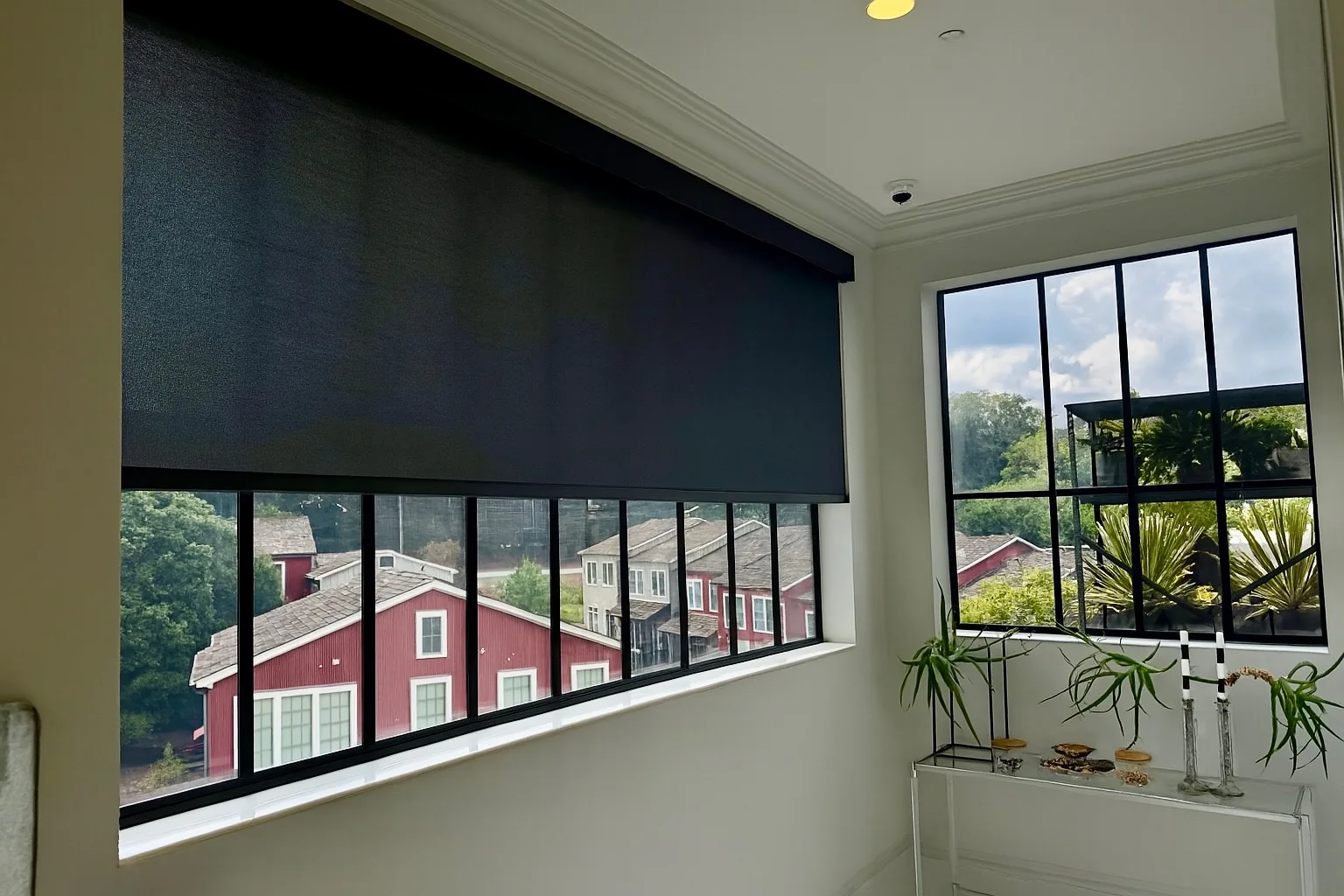
Roller shades with a solar or UV filtering fabric are a third strong choice, especially in a room with a large picture window or sliding glass door. They roll neatly out of the way when you want the view, and drop back down when the sun swings around in the afternoon.
Practical Habits That Extend the Life of Your Art
Window coverings do most of the heavy lifting, but a few simple habits help too:
- Rotate art on a schedule. Swapping pieces between a bright wall and a shaded wall every year or two spreads out UV exposure so no single piece takes all the damage.
- Close shades during peak sun hours, even if the room feels a little dim during that stretch of the afternoon.
- Use UV filtering glass or acrylic in the frame itself for especially valuable pieces, as an added layer on top of your window coverings.
- If you travel or are away from home for stretches at a time, set motorized shades on a schedule so they close automatically during the sunniest hours, even when nobody is there to do it by hand.
That last point matters more than people expect. A lot of fading happens exactly when nobody is home to think about it, on a bright afternoon while the family is at work or on a trip. A scheduled, motorized shade keeps protecting your art whether you remember or not.
Building a Plan Around Your Specific Walls
Every living room is different. The right combination of solar screens, cellular shades, or roller shades depends on which walls get the harshest light, how big your windows are, and how you actually use the room during the day. A wall that gets soft morning light needs a different approach than a wall that bakes in west facing afternoon sun.
Matt Diaz has walked through plenty of Tucson living rooms where a family's favorite art was slowly fading without anyone noticing day to day. A short conversation about where your windows face and where your art hangs usually points to a clear answer, whether that is a solar screen on one window, a cellular shade on another, or a mix of both paired with a little rearranging of the room itself.
If you have paintings, prints, or photography you want to enjoy for years instead of watching them fade, it is worth a second look at both your window coverings and your layout. A little planning now protects pieces that cannot be replaced later.
Ready to protect the art in your home? Reach out through our contact page or call (844) 936-2446 to set up a free in-home consultation.