
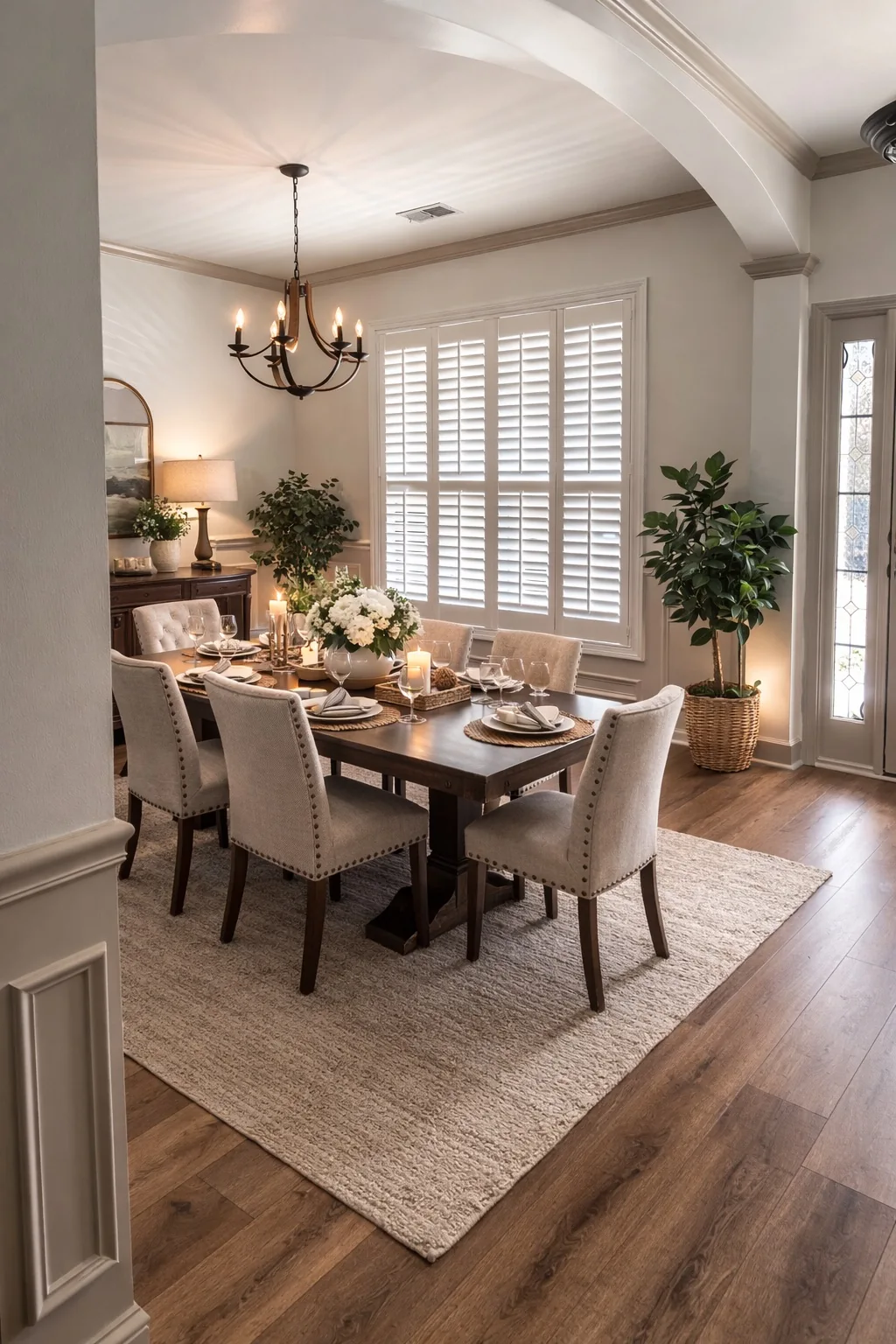
Why Architecture Matters When Choosing a Window Treatment
Tucson has a lot of homes with real Southwest character. Thick walls, rounded corners, deep window openings, and warm earth tone finishes are all part of the look, whether a home is true adobe construction or a newer build styled after that same territorial tradition. When you are choosing window coverings for a home like this, style and fit matter just as much as function.
Plantation shutters happen to work especially well with this kind of architecture. That is not an accident. The features that define Southwest and adobe style construction are the same features that let plantation shutters shine.
Deep Window Reveals Were Practically Made for Shutters
One of the most recognizable features of adobe and territorial style homes is the depth of the window openings. Thick walls create a deep reveal, sometimes six inches or more, well beyond what you see in a typical stick built home. That depth is exactly what plantation shutters need to look their best.
A mounted-in shutter frame sits inside that recess and becomes part of the wall itself, almost like a piece of trim work rather than something bolted on afterward. The panels open and close flush with the opening, and the deep reveal gives the shutter louvers room to tilt fully without hitting the glass or the frame. Blinds or curtains can technically hang in the same opening, but they tend to look like an accessory sitting in front of a beautiful architectural feature instead of completing it.
Earth Tone and Wood Finishes That Complement Southwest Interiors
Southwest and adobe style interiors usually lean on warm, natural materials. Think exposed wood beams, plaster walls, saltillo tile, and furniture in earthy browns, terracottas, and creams. Plantation shutters are available in a range of painted and stained wood finishes that sit comfortably in that palette.
A natural wood stain finish echoes exposed beams and wood furniture. A warm white or cream painted finish plays well against plaster walls and terracotta accents without looking cold or overly modern. Because the panels themselves become part of the window's architecture, the finish you choose has an outsized effect on how the whole room reads.
- Stained wood finishes that pick up the tone of ceiling beams or wood furniture.
- Warm off white or cream finishes that soften against plaster and stucco walls.
- Deeper earth tone stains for a more rustic, traditional look.
- Classic white for homes blending Southwest details with a more transitional interior.
How Shutters Handle Tucson's Intense Sun
Style is only part of the story. Southern Arizona homes deal with a long stretch of intense sun each year, with daytime highs commonly reaching 100 to 110 degrees. On top of that, the sun is strong here nearly year round, not just on the hottest days.
Plantation shutters give you fine, adjustable control over how much light and heat get into a room. Tilt the louvers nearly closed during the hottest part of the afternoon and you cut glare and block direct sun while still letting some air and light move through the room. Open them fully in the cooler morning hours or whenever the low-angle sun creates glare of its own.
That kind of layered control is harder to get from a single flat shade. Shutters let you fine tune the exact angle of the louvers, which matters in a climate where the sun's position and intensity change so much through the day and through the year.
A Fit for Both True Adobe and Territorial Style Homes
Not every home with this look is technically built from adobe brick. Many newer Tucson homes borrow the territorial or Santa Fe style look, with stucco exteriors, rounded parapets, and vigas, without the same thick adobe walls underneath. Plantation shutters still fit these homes well, since the style cues, wood tones, deep set windows, warm finishes, carry over even when the wall material is different.
Whether your home is a genuine older adobe structure in the foothills or a newer territorial style build in a Tucson subdivision, the design logic is the same. Shutters read as a built in architectural feature rather than a window covering that was added later, which fits the intentional, grounded feel these homes are going for.
What to Consider Before You Choose Shutters
A few practical things are worth thinking through before committing to shutters for a Southwest style home:
- Measure the actual depth of your window reveal. Deeper reveals give more mounting flexibility and a cleaner look.
- Think about which rooms get the most direct sun through the day, since those are the best candidates for shutters over lighter weight options.
- Consider louver size. Wider louvers tend to suit larger, more traditional Southwest window openings, while narrower louvers can work well in smaller or more detailed spaces.
- Decide how much of the window's architectural detail, like a curved top or an angled reveal, you want the shutter frame to follow.
Every window opening in an adobe or Southwest style home tends to have its own quirks, from rounded corners to slightly uneven reveals in older construction. That is normal, and it is one more reason a custom fit matters more here than in a typical tract home.
Getting a Fit That Actually Matches Your Home
Because these window openings can be irregular, off the shelf shutters rarely fit well. Matt Diaz measures every window by hand, so the shutter frame accounts for the actual depth, shape, and quirks of your specific opening rather than a standard size. That hands on measuring is what makes a shutter look like it was always part of the house.
If you have a Southwest or adobe style home and you are weighing your options for window coverings, plantation shutters are worth a serious look, not just for how they handle the sun, but for how naturally they fit the architecture you already have.
Curious whether shutters are the right call for your windows? Visit our contact page or call (844) 936-2446 to schedule a free in-home consultation.