
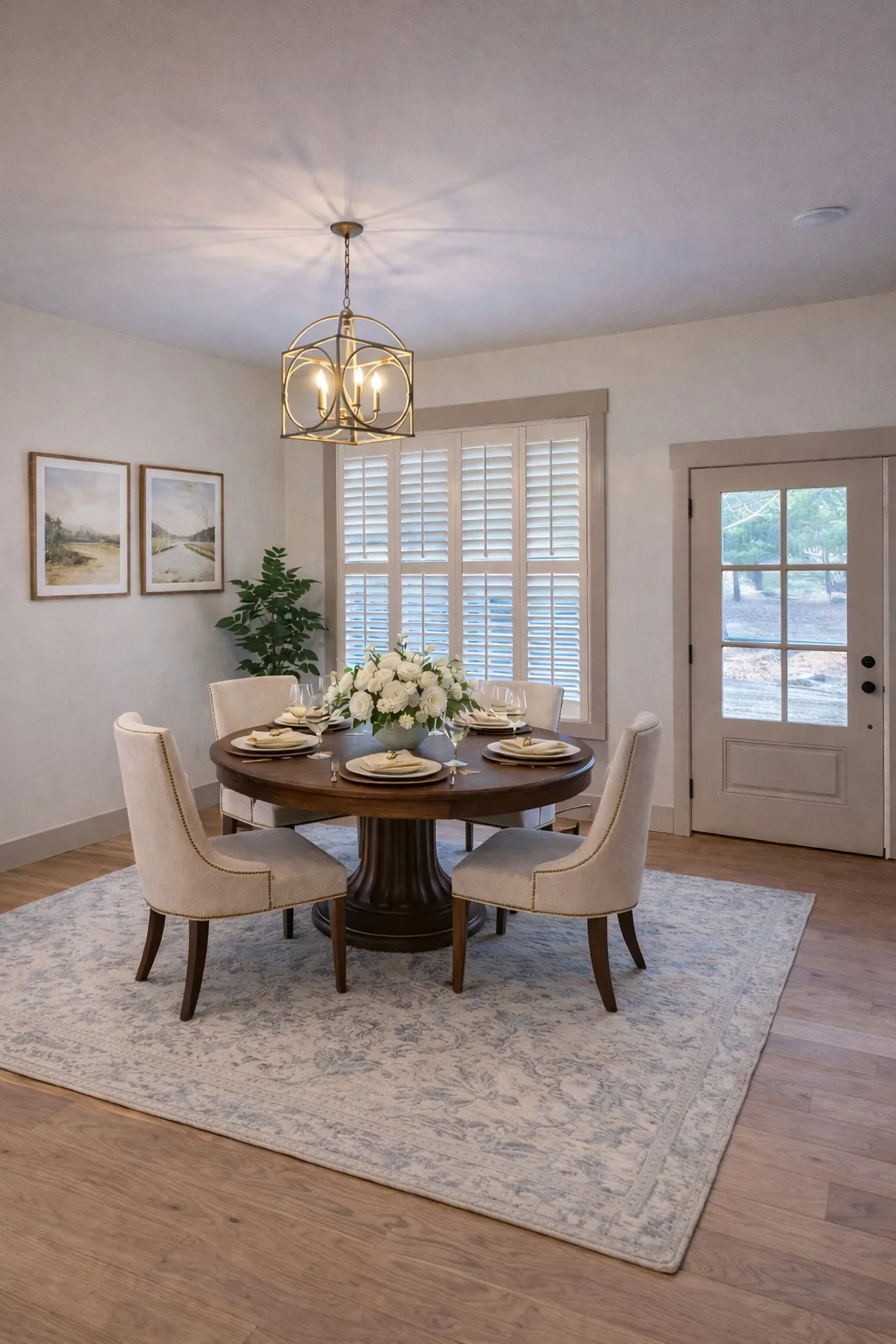
Why Shutter Pricing Feels Confusing
Ask five different companies what plantation shutters cost, and you might get five different answers. That is not because anyone is trying to confuse you. Shutters are a custom product, built to fit your exact windows, so the final price depends on a handful of choices you get to make along the way.
The goal of this post is to walk you through what actually drives the price up or down, so you can budget with confidence before you ever schedule a consultation. We will keep things in ranges rather than exact numbers, since your specific windows and choices will always shift the final quote.
Material Is the Biggest Factor
The single biggest driver of plantation shutter cost is what they are made of. There are two main categories most homeowners choose between.
- Faux wood or composite shutters: These are built from engineered materials designed to hold up well over time. They tend to sit at the lower to middle part of the price range and are a popular choice for most rooms in the house.
- Real wood shutters: Built from actual hardwood, these offer a lighter weight and a more traditional look and feel. They typically cost more than faux wood, especially in larger sizes, since real wood is a pricier raw material and requires more finishing work.
Neither option is automatically the "right" choice. It comes down to your budget, the size and location of your windows, and your personal preference for material and finish.
Size and Number of Windows
Shutters are priced per window, so the total project cost depends heavily on how many windows you are covering and how large each one is. A single small bathroom window will always cost less than a wide picture window or a large sliding glass door.
Here are a few size related factors that can move your quote up or down:
- Taller and wider windows need more panels and more material, which raises the price per opening.
- Unusual shapes, like arched windows or angled tops, generally cost more since they require custom cutting and extra labor.
- French doors and sliding doors often need a bi-fold or bypass shutter panel, which is typically priced higher than a standard hinged panel.
If you have a mix of window sizes throughout your home, expect your per-window price to vary room by room rather than being one flat rate for the whole house.
Louver Size Matters More Than You Might Think
Louvers are the individual slats that tilt open and closed. Plantation shutters usually come in a few standard louver widths, and the size you pick affects both the look and the price.
Wider louvers, generally in the 3 to 4.5 inch range, let in more light and offer a more open view when tilted, and they are a popular choice in living rooms and larger windows. Narrower louvers give a more traditional, tailored look and are often chosen for smaller windows or more classic interiors. Wider louvers can sometimes cost a bit more since fewer of them are needed per panel, but the difference is usually modest compared to material and size.
Installation Complexity
Not every window is a simple, square opening. Installation complexity is another piece of the overall cost that is easy to overlook when you are just comparing sticker prices.
Some of the factors that can add time and cost to installation include:
- Deep window sills or shallow mounting depth that require extra framing work.
- Windows located high up, over stairwells, or in hard to reach spots.
- Existing window treatments that need to be removed first.
- Homes with older or nonstandard window frames that need extra adjustment for a clean fit.
A straightforward, easy to reach window with a standard frame will almost always install faster and cost less in labor than a tricky, oversized, or hard to access one.
Why a Free In-Home Consultation Gives You a Real Number
Because so many factors go into a final shutter price, any number you see online is really just a starting point. The only way to get an accurate quote is to have someone measure your actual windows, see your home in person, and talk through your material and louver preferences.
That is exactly what a free in-home consultation is for. Matt Diaz personally visits your home, measures every window by hand, brings real samples so you can see and touch the materials, and walks you through your options at your own pace. There is no pressure to buy on the spot, and no guessing games about what something might cost. You leave the appointment with a real number based on your real windows.
Getting the Most Value for Your Budget
If you are working with a set budget, there are a few smart ways to stretch it further without sacrificing the look you want.
- Start with the most visible or most used rooms first, and add more windows in phases if needed.
- Consider faux wood in rooms where budget matters most, and save real wood for a few standout windows.
- Ask about standard louver sizes before requesting a custom width, since standard sizing is often more cost effective.
- Get your quote in writing so you can compare options side by side without any surprises later.
It also helps to think about which rooms actually need the durability and finish of real wood, and which ones would look just as good in faux wood. Bathrooms, laundry rooms, and kids' rooms are often a smart place to use faux wood, since it holds up well to daily bumps and everyday wear. Formal living rooms, home offices, and other rooms where you want a slightly more upscale feel are where real wood tends to shine.
Common Questions About Shutter Pricing
A few other questions come up often when homeowners start budgeting for plantation shutters.
- Does color affect the price? Standard paint and stain colors are usually included in the base price, while custom color matching can sometimes add a small upcharge.
- Do hidden tilt rods cost more? Many homeowners prefer a hidden tilt rod for a cleaner look instead of a visible center rod, and this option often comes with a modest added cost.
- Is measuring included? A professional measure should always be part of the process, whether it happens during your free consultation or as a separate step before your order is placed.
- How long does an order take? Since shutters are custom built for your exact windows, expect a production lead time of several weeks from order to installation.
Plantation shutters are a long-term upgrade to how your home looks and functions every day, and understanding what goes into the price helps you make a confident decision rather than a guess. If you are ready to get a real, accurate number for your own windows, we would love to help.
Call us at (844) 936-2446 or book your free in-home consultation online, and we will bring the samples straight to you.