
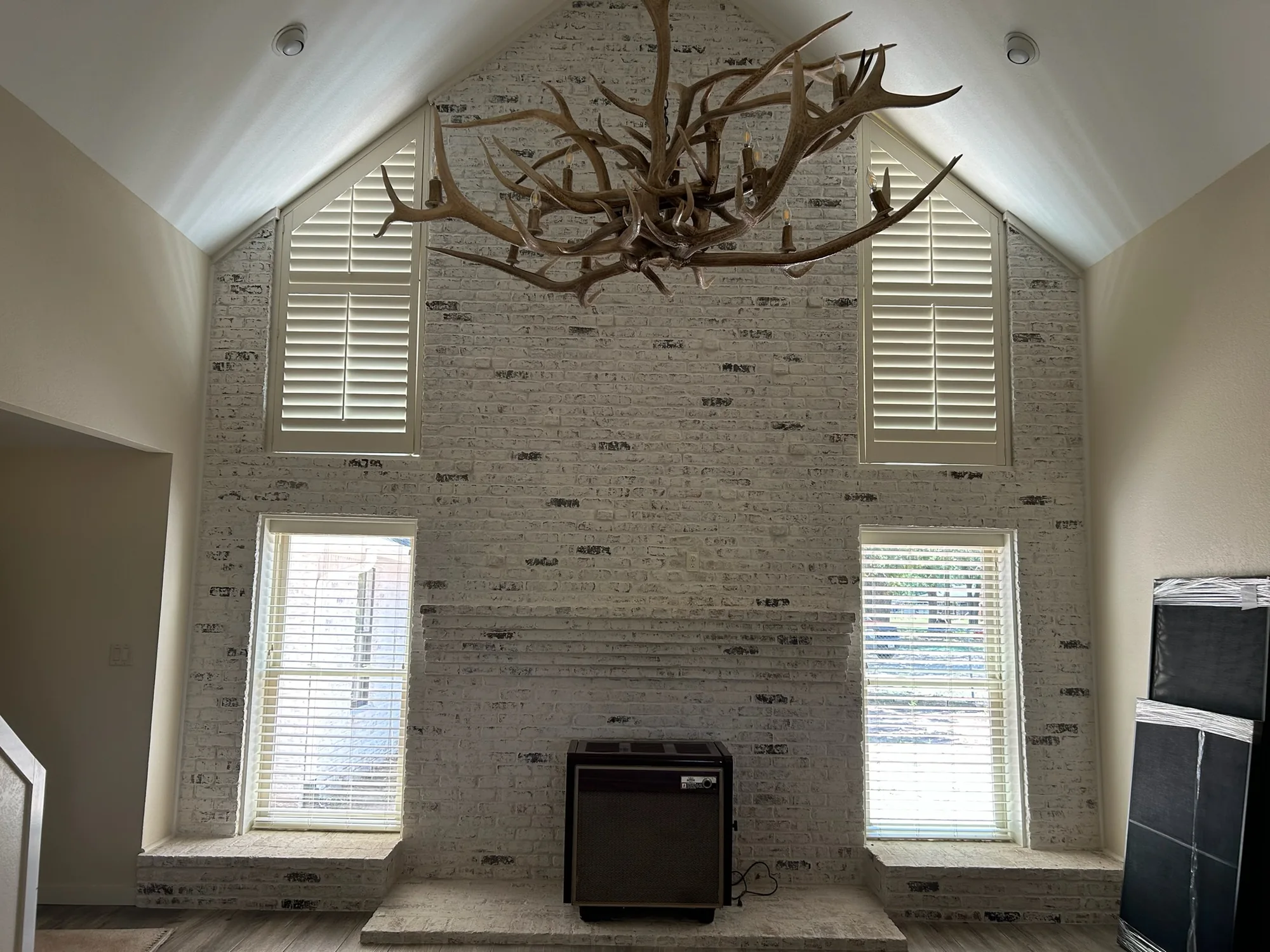
Why blinds stop staying open
If your blinds keep drooping, sliding closed on their own, or hanging crooked no matter how many times you adjust them, you are dealing with a mechanical problem, not something you are doing wrong. Blinds rely on a small set of moving parts to hold their position. Once one of those parts wears out, the whole slat assembly stops cooperating.
The good news is that most of these problems have a clear cause. The less good news is that some fixes are only temporary if the underlying material is old and worn out. Here is how to figure out what is actually going on with yours.
The tilt mechanism is worn out
The tilt mechanism is the small gear and wand or cord system that rotates the slats open and closed. Over years of daily use, the gears inside this mechanism wear down. When that happens, the slats will not hold an angle. They might tilt fine for a second, then slowly rotate back to closed, or they will not tilt smoothly at all.
This is one of the most common reasons blinds stop working correctly, especially on blinds that are used every single day. If your blinds have a wand, try turning it slowly and watching whether the slats respond right away or lag and slip. A lag or slip is a sign the tilt gear is stripped.
The cord lock has failed
Blinds that raise and lower with a cord use a cord lock, a small mechanism inside the head rail that grips the cord and holds the blind at whatever height you left it. When the cord lock wears out, the blind will slowly creep down on its own, or it will not hold at all and just drops.
A failing cord lock is different from a failing tilt mechanism. Tilt problems affect the angle of the slats. Cord lock problems affect the height of the whole blind. If your blinds are sliding down instead of tilting shut, the cord lock is the more likely culprit.
Warped or bent slats
Faux wood and vinyl slats can warp after years of exposure to heat and direct sun. A warped slat does not sit flat against the others, so the whole stack can look uneven or fail to close all the way. Individual slats can also get bent from being pulled at an angle, bumped by furniture, or handled roughly by kids or pets.
Tucson sees about 350 sunny days a year, and that much year-round sun exposure is hard on faux wood and vinyl blinds over time. Materials that sit in direct light for years can soften, warp, or become brittle just from heat and UV exposure. If your blinds are several years old and installed on a window that gets strong sun most of the day, warping is a common wear pattern.
Worn ladder strings and support cords
Inside most blinds, a system of thin strings called ladders hold the slats in place and let them tilt evenly. Over time, these strings stretch, fray, or snap, especially near the top where they take the most stress. When a ladder string fails, one side of the blind may hang lower than the other, or the slats may bunch unevenly instead of stacking flat.
This kind of wear is harder to see at a glance since the strings are mostly hidden inside the slats. A clue is if one section of the blind looks twisted or uneven compared to the rest, even though the tilt wand seems to work fine.
Simple fixes worth trying first
Before assuming the worst, a few basic checks can save you a repair or replacement.
- Clean the head rail and tilt mechanism. Dust and debris buildup can make gears stick or slip. A quick vacuum with a brush attachment sometimes solves minor tilt issues.
- Check for obstructions. Furniture, curtains, or a bent bracket can prevent the blind from sitting or moving correctly.
- Tighten mounting brackets. Loose brackets can make the whole blind sag or tilt unevenly even if the internal mechanism is fine.
- Inspect the cord for fraying or knots that might be jamming the lock mechanism.
- Try adjusting the tension on the cord lock if your blinds have an accessible adjustment screw.
When it makes more sense to just replace them
Small fixes work fine for minor issues, like a loose bracket or a dirty tilt gear. But once the tilt mechanism itself is stripped, the cord lock has fully failed, or several slats are warped, you are usually looking at a repair that takes as much time and money as new blinds, with a shorter lifespan afterward.
As a rule of thumb, if your blinds are more than eight to ten years old and showing more than one of these problems at once, replacement is usually the better value. Newer faux wood and cellular products also hold up to direct sun better than blinds made even a decade ago, so replacing old, sun worn blinds often means less maintenance going forward, not just a fresh look.
How to tell if it is one window or the whole house
Sometimes only one set of blinds is failing, usually the ones on the window that gets the most direct sun during the day. Other times, if all your blinds were installed around the same time, you might notice several sets starting to show the same wear within a year or two of each other. If you are already troubleshooting a second or third window, that is a good sign the whole batch is nearing the end of its useful life rather than dealing with one unlucky mechanism.
In that case, it can make more sense to plan a room by room replacement rather than patching one set of blinds at a time as each one fails. This also gives you a chance to reconsider the product itself. A window that gets brutal afternoon sun for years might be a better fit for a cellular shade or a faux wood blind built with more sun resistant materials than whatever was originally installed.
Preventing the same problem down the road
A few habits help any new blinds last longer once they are installed.
- Use the tilt wand or cord gently rather than yanking it, which puts less stress on the internal gears and strings.
- Dust the head rail every few months so debris does not build up around the tilt mechanism.
- Avoid leaving blinds tilted at an extreme angle for long stretches, which can add strain to the ladder strings over time.
- Consider a cordless or motorized lift on windows that get used often, since it removes one more part that can wear out.
If you are not sure whether your blinds are worth repairing or replacing, Matt Diaz can take a look during a free consultation and give you an honest answer, not just a sales pitch.
Dealing with blinds that will not stay open or closed the way they should? Reach out through our contact page or call (844) 936-2446 and we will help you figure out the best next step.