
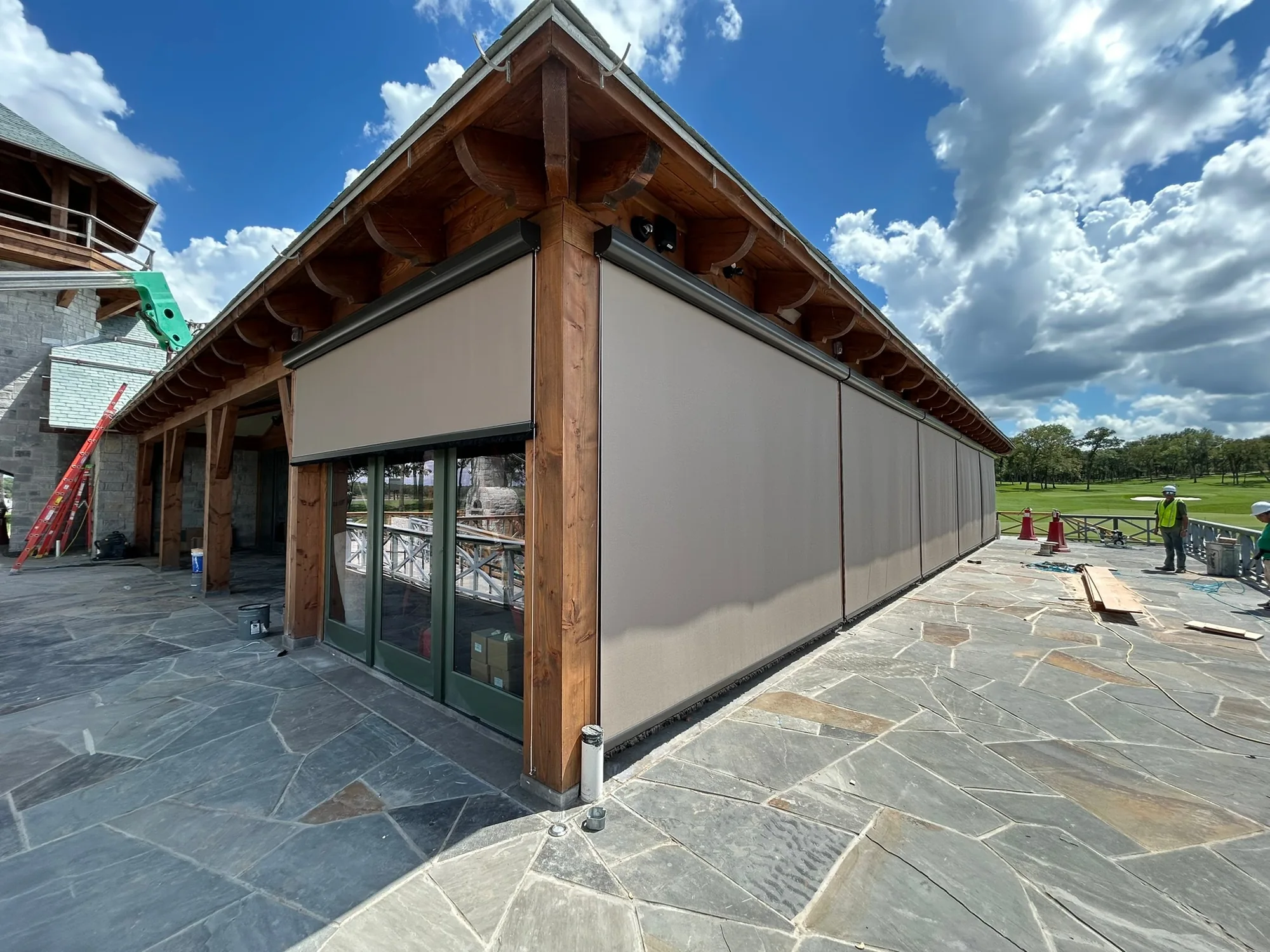
Outdoor living is a big part of life in Tucson. Covered patios, ramadas, and back porches get used almost year round, not just in the cooler months. But if your patio faces the wrong direction, or the sun tracks across it for hours every afternoon, it can be hard to actually enjoy that space. Two very different products can help: exterior solar screens and interior shades. They solve different problems, and knowing which one fits your patio makes a real difference.
What Exterior Solar Screens Actually Do
Exterior solar screens mount on the outside of your patio, ramada, or covered porch, usually on a track system along the posts or beams. Because they hang outside the structure itself, they stop sunlight and heat before it ever reaches the space where you are sitting.
This is the biggest advantage of an exterior screen. It is working at the source. On a west or south facing patio, exterior solar screens cut roughly 30 to 40 percent of the cooling load compared to leaving that side open, and they block up to about 99 percent of UV right at the screen itself. That matters a lot in Tucson, where the sun is intense nearly 350 days a year, not just during the hottest months.
For a covered patio or ramada that gets hit hard by afternoon sun, an exterior screen is usually the strongest option for making that space usable for more hours of the day.
What Interior Shades Actually Do
Interior shades mount inside the home, at the window or sliding door that opens onto the patio. They are not designed to stop heat before it reaches your outdoor space. Their real job is managing light, glare, and privacy for the room just inside the glass.
If your biggest complaint is not the patio itself but the harsh glare and heat that pours through a large slider or wall of windows looking out onto that patio, interior shades solve a different piece of the puzzle. They give you control over how much light comes into the living room or kitchen without changing anything about the patio outside.
Interior shades also give you more say over the finished look of the room. You can match fabric, color, and texture to the rest of your interior design, which is not something an exterior screen is built to do. For homeowners who spend more time enjoying the view from inside than sitting out on the patio itself, that flexibility often matters more than a small percentage of extra heat blocked outdoors.
What About Covered Patios With Deep Overhangs
Not every patio needs an exterior screen. Some homes already have a deep roof overhang or a solid patio cover that blocks most direct sun for much of the day. In that case, the bigger issue is usually reflected glare bouncing off pavers, pool water, or a light-colored wall, rather than direct heat pouring onto the patio itself.
For a patio like that, an interior shade at the connecting window or slider may be all you need. It is worth walking the space at different times of day before deciding, since the sun's angle changes quite a bit over the course of the year.
Where Exterior Screens Win
- Covered patios and ramadas that face west or south and get pounded by direct sun for hours.
- Outdoor kitchens or seating areas where you want the space to be usable during the hottest parts of the day.
- Homes where the goal is to actually block heat before it becomes a problem, not just filter it after the fact.
- Anyone who wants a big jump in outdoor comfort without changing the look of their interior rooms at all.
Exterior screens are a strong, purpose-built solution when the patio itself is the problem.
Where Interior Shades Win
- Homeowners who want more control over style, fabric, and color to match the room's design.
- Anyone who does not want exterior hardware, tracks, or mounting brackets visible on the outside of the home.
- Rooms where privacy and glare control matter more than blocking outdoor heat, like a home office or bedroom near the patio.
- Situations where the patio has good shade already, like a deep roof overhang, and the real issue is light coming through the glass.
Interior shades are the better fit when your main concern is what is happening inside the house, not what is happening on the patio itself.
Can You Use Both?
Yes, and many Tucson homeowners do exactly that. An exterior solar screen on the patio blocks the bulk of the heat and glare before it ever reaches your slider or windows. An interior shade then gives you a finishing layer of control for the room itself, for those evenings when you want a softer look or a little extra privacy.
This combination tends to work especially well for homes with large glass doors that open directly onto a covered patio. The exterior screen protects the outdoor space and the glass, while the interior shade dresses the room and manages the last bit of light that makes it through.
Getting the Measurements Right
Patio screens are not a one-size-fits-all product. Every ramada, post spacing, and roofline is a little different, and a screen that is measured wrong will not track smoothly or seal out light the way it should. Matt Diaz measures and installs every patio screen job personally, so the fit is right the first time and the screen actually functions the way it is supposed to for years of Tucson sun.
Making the Right Call for Your Patio
Start by asking a simple question. Is the problem happening outside on the patio, or inside the house looking out at it? If your patio is unusable by early afternoon most of the year, an exterior solar screen is going to make the biggest difference. If the patio itself is fine but the glare and heat coming through your windows into the living room is the real issue, an interior shade is the better first step. And if both are a problem, pairing the two is a smart way to handle it.
If you are not sure which fits your home best, that is exactly what a free consultation is for. Book a visit and Matt Diaz will walk your patio and windows with you, measure everything, and give you an honest recommendation, no pressure attached.